Welcome Message
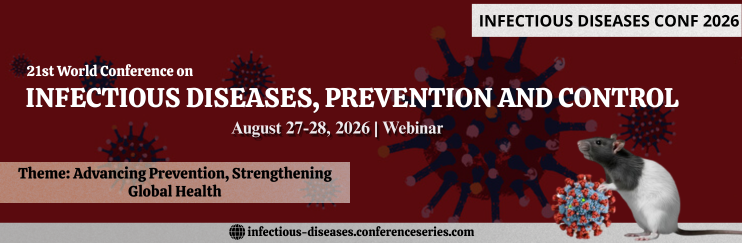
We are pleased to welcome participants from around the world to the 21st World Conference on Infectious Diseases, Prevention and Control,, taking place as a Webinar on August 27–28, 2026. The conference will be held under the theme “Advancing Prevention, Strengthening Global Health” highlighting the latest advances in infectious disease research, prevention strategies, surveillance systems, and public health initiatives aimed at protecting populations worldwide.
Infectious Diseases 2026 provides a valuable platform to explore current developments and future directions in the prevention, diagnosis, treatment, and control of infectious diseases. We are honored to host distinguished speakers and leading experts who will share their knowledge, research findings, and practical insights, creating an enriching learning experience for all participants.
This event is dedicated to promoting awareness, fostering scientific exchange, and encouraging collaboration in the field of infectious diseases and infection prevention. It offers an excellent opportunity for researchers, clinicians, epidemiologists, academicians, healthcare professionals, policymakers, and industry representatives to present their work, discuss emerging challenges, and exchange innovative ideas. Whether participants aim to showcase their research, gain new perspectives, or establish meaningful professional connections, the conference provides an engaging environment for learning, networking, and career advancement.
We eagerly anticipate welcoming you to the 21st World Conference on Infectious Diseases, Prevention and Control 2026 and sharing this impactful virtual experience with you.
About Conference
The 21st World Conference on Infectious Diseases, Prevention and Control will be conducted as a global webinar on August 27–28, 2026, bringing together an international community of scientists, healthcare professionals, researchers, epidemiologists, public health practitioners, academicians, and industry experts. Guided by the theme “Advancing Prevention, Strengthening Global Health” the conference is designed to advance scientific dialogue and encourage collaborative approaches to addressing the growing challenges posed by infectious diseases worldwide.
The conference aims to strengthen connections between research, clinical practice, and public health policy by fostering meaningful interactions among professionals from diverse backgrounds. Discussions will cover a broad spectrum of topics, including emerging and re-emerging infections, antimicrobial resistance, vaccine development, epidemiological surveillance, infection prevention strategies, digital health technologies, and pandemic preparedness.
By bringing together expertise from across disciplines and regions, the conference seeks to inspire new partnerships, accelerate scientific progress, and support global efforts to prevent infectious diseases and improve public health outcomes for future generations.
Join Infectious Diseases Conf 2026 to engage, collaborate, and drive innovation in infectious disease prevention and global health.
Why to Attend
This conference offers an exceptional opportunity to connect with a diverse international network of researchers, healthcare professionals, epidemiologists, public health experts, academicians, and industry leaders working at the forefront of infectious disease prevention and control. Participants will gain valuable insights into the latest scientific advancements, innovative technologies, and evidence-based strategies that are transforming the way infectious diseases are detected, managed, and prevented worldwide.
The scientific program will cover a wide range of topics, including emerging and re-emerging infectious diseases, antimicrobial resistance, vaccine research and development, epidemiological surveillance, infection prevention practices, outbreak preparedness, global health security, public health policy, and digital innovations in healthcare. Attendees will have the opportunity to learn from renowned experts, explore current challenges, and discover practical solutions that can be applied in research, clinical settings, and public health programs.
Key Conference Features
-
Presentations by Eminent Scientists: Learn from leading global experts in infectious diseases, prevention, and public health.
-
Interactive Debates and Plenary Sessions: Engage in evidence-based discussions on emerging infections, outbreaks, and global health challenges.
-
Symposia and Workshops: Participate in focused sessions offering practical insights into diagnosis, surveillance, and infection control strategies.
-
Networking Opportunities: Connect with researchers, clinicians, epidemiologists, microbiologists, and public health professionals worldwide.
-
Professional Development: Enhance knowledge and skills through exposure to the latest advancements in infectious disease research and practice.
Target Audience
-
Infectious Disease Specialists
-
Epidemiologists
-
Public Health Professionals
-
Microbiologists
-
Virologists
-
Immunologists
-
Bacteriologists
-
Healthcare Administrators
-
Physicians and General Practitioners
-
Hospital Infection Control Teams
-
Critical Care Specialists
-
Pulmonologists
-
Pharmacologists
-
Clinical Researchers
-
Biomedical Scientists
-
Laboratory Technicians
-
Vaccine Researchers and Developers
Abstract Submission and Registration Guidelines
Speakers, researchers, clinicians, and public health professionals from across the globe are invited to submit their abstracts, full manuscripts, case reports, posters, and e-posters by selecting a relevant topic from the Call for Abstracts list or from their specific area of expertise in infectious diseases and public health.
Abstract Submission Guidelines, Review and Publication
The abstract should not exceed 500 words and the title must be written in sentence case while including full names of authors and co authors with their institutional affiliations. A short author biography of up to 150 words along with a recent photograph should also be provided. Each submission must clearly present objectives methodology key findings and conclusions. All abstracts will be reviewed by the Scientific Committee and expert reviewers and acceptance or revision feedback will be shared within 24 to 48 hours of submission with the final decision resting with the review committee. Accepted abstracts will be published in the official conference proceedings and associated journal platform ensuring academic visibility and recognition.
How to Register
Visit the registration page to complete your enrollment and secure your participation. Join this international platform to contribute, collaborate, and stay updated with the latest developments in infectious diseases and global health.
Sessions & Tracks
Emerging Infectious Diseases and Global Health Security focuses on newly identified pathogens and evolving health threats that impact populations worldwide. This area explores disease emergence transmission dynamics risk assessment and preparedness strategies. Researchers investigate environmental influences population movement microbial evolution and surveillance mechanisms to strengthen early detection and response capabilities. Advanced monitoring systems genomic technologies and international collaborations support rapid identification of health threats before widespread transmission occurs. The knowledge generated supports effective public health interventions strengthens healthcare preparedness and enhances global health protection against future outbreaks and pandemics.
• Novel pathogen discovery
• Disease emergence patterns
• Global health preparedness
• Surveillance and monitoring systems
• Outbreak response strategies
Epidemiology and Disease Surveillance examines the distribution determinants and patterns of infectious diseases within populations. It utilizes statistical methods field investigations and digital technologies to identify trends monitor disease spread and predict outbreaks. Researchers evaluate demographic factors environmental influences and behavioral determinants that contribute to disease occurrence. Effective surveillance systems provide accurate data for timely interventions resource allocation and evidence-based decision making. This area plays a fundamental role in strengthening disease prevention programs and improving public health outcomes at local national and international levels.
• Disease trend analysis
• Surveillance network development
• Outbreak investigation techniques
• Population health assessment
• Data driven public health strategies
Viral Diseases and Advanced Research explores the biology evolution and clinical impact of viruses affecting human health. Scientists investigate viral replication host interactions disease progression and transmission mechanisms while developing innovative approaches for prevention diagnosis and management. Research efforts focus on understanding both established and newly emerging viral threats that challenge healthcare systems worldwide. Advanced laboratory techniques molecular studies and translational research contribute to improved disease control strategies and support the development of effective therapeutic and preventive solutions.
• Viral pathogenesis studies
• Host virus interactions
• Molecular virology advances
• Emerging viral infections
• Innovative therapeutic approaches
Bacterial Infections and Control Measures focuses on understanding pathogenic bacteria their mechanisms of infection and strategies for disease prevention. Researchers examine microbial behavior resistance development host responses and effective management practices that reduce disease burden. This field emphasizes early diagnosis appropriate treatment and infection control measures that prevent transmission within communities and healthcare environments. Ongoing scientific advancements continue to improve understanding of bacterial diseases while supporting innovative approaches for prevention and management.
• Bacterial pathogenicity research
• Infection prevention methods
• Clinical management approaches
• Laboratory diagnostics
• Community protection initiatives
Antimicrobial Resistance and Stewardship addresses the growing challenge of drug resistant microorganisms and their impact on healthcare systems worldwide. Research focuses on resistance mechanisms surveillance programs responsible antimicrobial use and innovative treatment approaches. Scientists investigate genetic adaptations and environmental factors that contribute to resistance development. Effective stewardship initiatives promote optimal medication use while preserving therapeutic effectiveness for future generations. This field remains essential for combating one of the most significant public health concerns of the modern era.
• Resistance mechanism analysis
• Antimicrobial stewardship programs
• Drug efficacy monitoring
• Alternative treatment options
• Global resistance surveillance
Parasitic Diseases and Tropical Health investigates infections caused by parasites that affect millions across tropical and subtropical regions. Studies focus on transmission pathways disease burden environmental influences and integrated control strategies. Researchers explore innovative diagnostic methods prevention programs and treatment interventions that improve health outcomes in affected populations. This area supports international efforts aimed at reducing neglected tropical diseases and promoting sustainable healthcare solutions in vulnerable communities.
• Parasitic disease management
• Tropical health challenges
• Vector control strategies
• Environmental risk assessment
• Community intervention programs
Fungal Infections and Clinical Challenges examines the increasing prevalence of fungal diseases and their impact on vulnerable populations. Researchers explore pathogenic mechanisms host susceptibility diagnostic innovations and treatment strategies to improve clinical outcomes. The growing incidence of fungal infections highlights the need for enhanced surveillance advanced diagnostics and effective therapeutic approaches. This field contributes to better understanding of fungal pathogens and supports improved management of complex infectious conditions.
• Fungal pathogen biology
• Clinical diagnosis techniques
• Antifungal treatment approaches
• Opportunistic infections
• Emerging fungal threats
Infection Prevention and Healthcare Safety focuses on reducing disease transmission within healthcare environments and community settings. Evidence-based practices improve patient safety protect healthcare workers and strengthen infection control programs. Researchers evaluate preventive measures healthcare protocols and quality improvement initiatives that minimize infection risks. This area supports the development of safer healthcare systems while enhancing public confidence in disease prevention efforts and healthcare delivery services.
• Hospital infection control
• Patient safety initiatives
• Healthcare worker protection
• Sterilization and disinfection methods
• Prevention program evaluation
One Health and Zoonotic Diseases highlights the relationship between human animal and environmental health. Researchers investigate diseases transmitted between animals and people while promoting collaborative approaches to disease prevention and management. Integrated surveillance systems ecological studies and cross-sector partnerships help identify emerging threats and strengthen response strategies. This framework supports sustainable health solutions that address complex challenges at the intersection of public health veterinary science and environmental stewardship.
• Zoonotic disease prevention
• Human animal health connections
• Environmental health factors
• Cross disciplinary collaboration
• Integrated surveillance systems
Diagnostic Microbiology and Laboratory Medicine focuses on advanced methods for detecting identifying and characterizing infectious agents. Innovations in laboratory science improve diagnostic accuracy reduce turnaround times and support timely clinical decision making. Researchers develop molecular assays automated platforms and next generation technologies that enhance pathogen detection capabilities. Accurate diagnostics remain essential for effective disease management surveillance activities and public health preparedness.
• Rapid diagnostic technologies
• Molecular testing methods
• Laboratory quality systems
• Microbial identification techniques
• Diagnostic innovation research
Public Health Policy and Disease Control explores strategies that support disease prevention effective healthcare delivery and sustainable public health systems. Experts examine policy development health regulations governance frameworks and population-based interventions that strengthen disease control efforts. Research focuses on translating scientific evidence into practical policies that improve community health outcomes and enhance healthcare accessibility. This area also addresses emergency preparedness resource allocation and international cooperation in responding to infectious disease threats. Strong public health policies create the foundation for long-term disease prevention and contribute to healthier and more resilient populations across diverse settings.
• Health policy development
• Disease control frameworks
• Community health planning
• Regulatory approaches
• Public health governance
Foodborne and Waterborne Diseases addresses infections transmitted through contaminated food products and unsafe water sources. Researchers investigate pathogen contamination routes outbreak patterns environmental factors and preventive strategies that protect public health. Scientific studies focus on improving food safety standards water quality monitoring and risk assessment methods. Advanced detection technologies support rapid identification of contamination events and facilitate effective outbreak management. This area contributes to reducing disease burden through improved sanitation practices public awareness programs and strengthened food and water safety systems.
• Food safety monitoring
• Water quality assessment
• Outbreak source identification
• Preventive health measures
• Public awareness initiatives
Respiratory Infections and Pulmonary Health examines infectious diseases that affect the respiratory system and contribute significantly to global morbidity and mortality. Researchers study pathogen transmission respiratory immune responses clinical manifestations and risk factors associated with respiratory illnesses. Innovative diagnostic technologies treatment approaches and prevention strategies are developed to improve patient outcomes. Particular attention is given to airborne transmission patterns and community-based interventions that limit disease spread. This field supports comprehensive efforts to reduce respiratory disease burden and enhance pulmonary health across all age groups.
• Respiratory pathogen research
• Airborne transmission studies
• Pulmonary infection management
• Community prevention strategies
• Diagnostic advancements
Pediatric Infectious Diseases focuses on infections affecting infants children and adolescents during critical stages of growth and development. Researchers explore age-specific disease patterns immune responses clinical presentations and management strategies tailored to younger populations. Studies emphasize early diagnosis prevention programs and effective therapeutic interventions that improve child health outcomes. The field also examines emerging infectious threats and healthcare challenges affecting pediatric populations worldwide. Through continuous research and clinical innovation this area supports healthier childhood development and improved quality of care for young patients.
• Childhood infection prevention
• Pediatric disease management
• Neonatal health concerns
• School health programs
• Child focused diagnostics
Travel Medicine and International Health addresses infectious disease risks associated with international travel migration and global mobility. Experts evaluate health threats preventive measures travel advisories and disease surveillance systems that support safe movement across borders. Research focuses on understanding disease transmission patterns among travelers and developing strategies to reduce health risks. International collaboration and effective monitoring programs contribute to rapid identification and management of imported infections. This area plays an important role in protecting global health in an increasingly interconnected world.
• Travel related infections
• International disease surveillance
• Risk assessment strategies
• Health advisory development
• Border health management
Immunology and Host Defense Mechanisms explores how the immune system recognizes responds to and eliminates infectious agents. Researchers investigate cellular responses molecular pathways immune regulation and protective mechanisms that contribute to disease resistance. Understanding host-pathogen interactions provides valuable insights into disease progression and recovery processes. Scientific discoveries in immunology support the development of innovative preventive and therapeutic approaches while enhancing knowledge of immune system function. This field remains central to advancing infectious disease research and improving public health outcomes.
• Immune response pathways
• Host pathogen interactions
• Cellular defense mechanisms
• Immune regulation studies
• Protective immunity research
Artificial Intelligence and Digital Health Solutions focuses on advanced computational technologies that support disease prediction monitoring diagnosis and management. Researchers apply machine learning predictive analytics and health informatics tools to improve healthcare efficiency and strengthen public health decision making. Digital platforms enable real-time surveillance rapid data analysis and enhanced outbreak forecasting capabilities. Innovative technologies also facilitate personalized healthcare approaches and optimize resource utilization. This rapidly evolving field is transforming infectious disease research and modern healthcare delivery systems.
• Predictive analytics systems
• Artificial intelligence applications
• Digital surveillance platforms
• Health data integration
• Smart healthcare technologies
Pandemic Preparedness and Crisis Management examines comprehensive strategies for responding to large-scale infectious disease emergencies. Researchers evaluate preparedness frameworks emergency response systems coordination mechanisms and resource management approaches that strengthen resilience during health crises. Lessons learned from previous outbreaks inform future planning and policy development. Effective preparedness requires collaboration among healthcare institutions governments researchers and international organizations. This area contributes to improving response capabilities minimizing societal disruption and protecting public health during global emergencies.
• Emergency response planning
• Pandemic risk assessment
• Crisis coordination systems
• Resource management strategies
• Health security initiatives
Environmental Health and Infectious Disease Dynamics investigates how environmental conditions influence disease transmission patterns and population health outcomes. Researchers study climate variability ecological changes urbanization and environmental exposures that contribute to infectious disease emergence and spread. Advanced monitoring systems help identify environmental risk factors and support preventive interventions. Understanding these complex relationships enables more effective disease control strategies and strengthens public health preparedness. This area promotes sustainable approaches that protect both environmental and human health.
• Climate related health impacts
• Ecological disease drivers
• Environmental monitoring systems
• Sustainable health solutions
• Disease transmission dynamics
Innovations and Future Perspectives in Infectious Disease Research highlights groundbreaking discoveries and emerging technologies shaping the future of disease prevention and control. Researchers integrate multidisciplinary approaches advanced scientific methods and transformative healthcare solutions to address evolving global health challenges. Areas of focus include precision medicine genomic technologies digital innovations and next-generation therapeutic strategies. Continuous scientific advancement drives the development of more effective interventions and enhances understanding of infectious diseases. This field serves as a platform for exploring future opportunities that will redefine public health and infectious disease management.
• Translational research developments
• Precision health approaches
• Advanced biomedical technologies
• Innovative disease control methods
• Future healthcare advancements
Market Analysis
The global infectious diseases prevention, diagnostics, and treatment market is witnessing rapid expansion due to the increasing burden of emerging infections, antimicrobial resistance, and recurrent outbreak events across the world. The rising frequency of epidemic and pandemic threats, coupled with global mobility and environmental changes, continues to drive demand for advanced infectious disease surveillance, prevention strategies, and clinical management solutions. According to industry projections, the infectious disease diagnostics and therapeutics market is expected to grow significantly over the next decade, supported by strong investments in public health infrastructure and research innovation.
Technological advancements are playing a transformative role in reshaping infectious disease detection, monitoring, and control systems. Innovations such as molecular diagnostics, next-generation sequencing, artificial intelligence-driven outbreak prediction, digital epidemiology platforms, rapid point-of-care testing, and advanced vaccine development technologies are enhancing early detection capabilities and improving patient outcomes. In addition, growing investments from governments, global health organizations, and private sectors are accelerating research in vaccines, antivirals, and antimicrobial resistance solutions, creating new opportunities in both developed and developing regions.
Global Infectious Disease Market Growth (2024–2030)
The global infectious disease diagnostics and therapeutics market is projected to experience strong growth between 2024 and 2030 due to the rising incidence of infectious outbreaks, increasing antimicrobial resistance, and growing demand for rapid diagnostic solutions. Expanding healthcare infrastructure and increasing awareness of early disease detection are further contributing to market expansion. The growing burden of viral, bacterial, fungal, and parasitic infections continues to strengthen the need for efficient prevention and treatment strategies. Rising investments in vaccine development and public health surveillance systems are also driving global market growth. In addition, increasing adoption of digital health tools and laboratory automation is improving diagnostic efficiency and healthcare response capabilities worldwide.

Key Drivers of Market Growth by 2030
Key drivers supporting market expansion include the increasing prevalence of emerging and re-emerging infectious diseases, rising antimicrobial resistance, and growing focus on pandemic preparedness. Additional factors such as advancements in molecular diagnostics, AI-based disease prediction systems, improved vaccine technologies, and expansion of global surveillance networks are significantly influencing market growth. The rising adoption of precision medicine, rapid diagnostic kits, and point-of-care testing is further improving early detection and treatment outcomes. Government initiatives, WHO-led global health programs, and increased funding for infectious disease research are strengthening healthcare systems worldwide. Continuous innovation in biotechnology, immunology, and digital health is expected to further enhance disease control strategies and global health security.

Past Conference
The 20th World Conference on Infectious Diseases, Prevention and Control 2025 was successfully conducted on March 19–20, 2025 in Berlin, Germany under the theme “Advances in Infectious Disease Prevention, Global Health Security, and Outbreak Management.” The conference brought together infectious disease specialists epidemiologists microbiologists public health experts researchers academicians and healthcare professionals from across the globe to share knowledge and discuss the latest developments in infectious disease prevention and control.
The scientific program included keynote lectures oral and poster presentations panel discussions and interactive workshops covering emerging infectious diseases antimicrobial resistance vaccine development outbreak surveillance infection prevention strategies and innovations in diagnostic technologies. The event emphasized the importance of global collaboration in addressing infectious disease challenges and strengthening preparedness systems for future health emergencies. Participants also explored advancements in molecular diagnostics AI driven surveillance systems and novel therapeutic approaches aimed at improving patient outcomes and public health responses.
The conference provided a strong platform for early career researchers and students to present their work receive expert feedback and engage in meaningful scientific discussions. It also encouraged interdisciplinary collaboration between clinical research public health policy and biomedical innovation fostering new partnerships that support future research and global health initiatives.